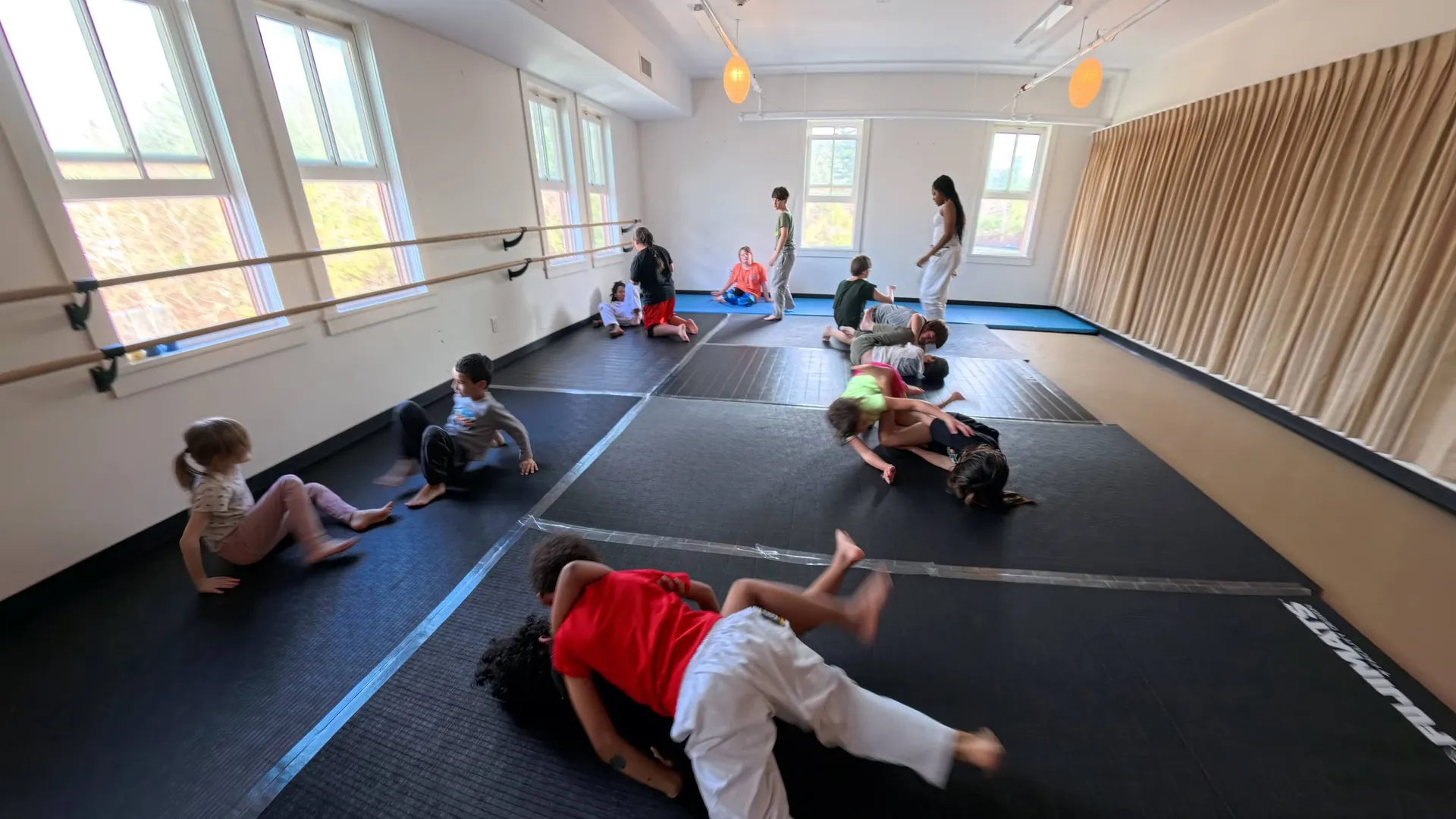
5 Core Rules for Safe, Clean Jiu Jitsu Class
Kids, teens, and adults | Tannersville, NY
Avoid the fight. Use control if you must. Reset on tap. Stay clean. Be kind.
- Anti-bullying boundaries with clear escalation
- Safety-first partner training and tap respect
- Hygiene standards that reduce infection risk
Evidence-backed standards for families and beginners.
Updated March 2026 | Sensei Sandy BJJ | Tannersville, NY Reserve Your Free First Visit.
If you searched "sensei rules", you probably want something simple that keeps kids, teens, and adults safe. Reserve Your Free First Visit.
At Sensei Sandy Brazilian Jiu Jitsu in Tannersville, NY, our Sensei Rules are built around 2 realities:
- Contact sports can spread skin infections if hygiene is sloppy.
- Safe training requires controlled speed, respecting taps, and helpful partner habits.
So our rules are direct, repeatable, and posted in the gym.
The fast answer: the 5 Sensei Rules
- Avoid the fight. Walk away, create space, get to safety, get an adult.
- If physically attacked, defend yourself. Protect your head, keep balance, get safe, get help.
- If verbally attacked, use the 3 T Steps: Talk, Tell, Tackle (tie up) only when physical restraint is required for protection.
- No punching or kicking. We use control positions and we negotiate.
- Submissions are slow and gentle. Minimal force, controlled mechanics, release promptly on tap.
Below is why each rule exists, with facts you can quote.
Why Sensei Rules start with "avoid the fight"
Most families do not want their kid trained to "win fights." They want their kid trained to get safe.
That is also how schools think about safety.
In New York, the Dignity for All Students Act was signed September 13, 2010, took effect July 1, 2012, and amendments were effective July 1, 2013.[1]
Avoiding the fight is the highest skill because it prevents the worst outcomes, and it keeps kids inside school expectations.
Sensei Rules for bullying and verbal conflict
Bullying has a real definition, more than a vibe.
StopBullying.gov says bullying is unwanted, aggressive behavior involving a real or perceived power imbalance.[2] The CDC definition includes these core points and adds repetition or likely repetition.[3]
Bullying is not rare. NCES reports that in 2021 to 2022, about 19% of students ages 12 to 18 reported experiencing bullying during school.[4]
That is why our Sensei Rules include a simple script and a clear escalation path, not trash talk and not "tough it out."
The 3 T Steps we teach
- Talk: calm voice, "Please step back."
- Tell: strong voice, "STEP BACK PLEASE."
- Tackle (tie up): only when physical restraint is necessary for self-defense. Control, then get away and get help.
Why Sensei Rules say "no punching or kicking"
Striking escalates fast and creates chaos. Our program chooses control positions because they are easier to control, easier to supervise, and easier to teach with safety boundaries.
This also matches safety research comparisons that frequently show favorable safety outcomes in jiu jitsu than in other combat sports contexts.[5]
That does not mean jiu jitsu is risk free. It means we can design training to reduce risk even more. Browse the beginner BJJ glossary.
Why Sensei Rules make submissions slow and gentle
This is the heart of safe training: go slow enough that your partner can tap, and you can release holds instantly.
A 2025 epidemiology study reported injury incidence of 5.5 per 1000 hours of training and 55.9 per 1000 matches in competition for BJJ practitioners.[6]
A 2021 paper found that 2 out of 3 athletes reported at least 1 injury within a 3 year period that caused a 2 week absence from training.[7]
Release on tap. Every time.
Sensei Rules for respect and behavior
- Listen to coach the first time.
- Be kind and respectful to everyone, including family.
- Line up at the start and end of class.
- Shake hands at the end of class.
- Raise your hand for questions.
- Use control and take care of your partner.
- Tap early, release holds immediately when partner taps.
- If someone calls for a pause or coach says "Time," pause right away.
- No teasing, trash talk, or bullying in the club.
When adults respond fast and consistently, bullying drops.[8] Browse the beginner BJJ glossary.
Sensei Rules for cleanliness and infection prevention
Clean mats and clean uniforms are not optional. They are part of safety.
1) Wash and dry your gear after small-group class
CDC guidance for athletes says to wash your uniform, towels, and clothing after each use.[9]
2) No shoes on the mat
Shoes track germs onto training surfaces. Some germs can survive on surfaces for hours, days, or even weeks.[10]
3) Keep the gym and shared gear clean
CDC guidance for athletic facilities says to clean shared equipment after each use and allow it to dry before use.[11]
4) Report skin issues early
The CDC notes common infections transmitted among wrestlers include ringworm, herpes gladiatorum, and bacterial infections including MRSA.[12]
That is why we use this rule: "If I feel dizzy, uncomfortable, or need a break, I tell the coach."
The point of Sensei Rules
Sensei Rules are not about being strict. They are about building a room where people can train hard with mutual safety, clean hygiene, and respectful support.
If you want a simple standard to take home, start here:
Avoid the fight. Use control if you must. Reset on tap. Stay clean. Be kind. See 12-week program pricing.
Related reading
- Beginner-friendly BJJ, safety context
- How to fall safely in BJJ (breakfalls guide)
- Explore the full Sensei Sandy blog
References
- New York State Education Department: The Dignity for All Students Act (DASA)
- StopBullying.gov: What Is Bullying
- CDC: Bullying | Youth Violence Prevention
- National Center for Education Statistics: Fast Facts - Bullying
- Assessment of Injuries During Brazilian Jiu-Jitsu Competition
- Injury prevalence among Brazilian Jiu-Jitsu practitioners globally (2025)
- Injury Patterns, Risk Factors, and Return to Sport in Brazilian Jiu-Jitsu (2021)
- StopBullying.gov: Respond to Bullying
- CDC: Athletes - MRSA Prevention and Control
- CDC: Preventing Methicillin-resistant Staphylococcus aureus (MRSA)
- CDC: Athletic Facilities - MRSA Prevention and Control
- CDC MMWR: Outbreak of Skin Lesions Among High School Wrestlers
Want a safety-first beginner class?
Start with calm coaching, clear rules, and respectful training standards for kids, teens, and adults.
Questions first? Call/text (917) 736-8649.
Reserve Your Free First Visit