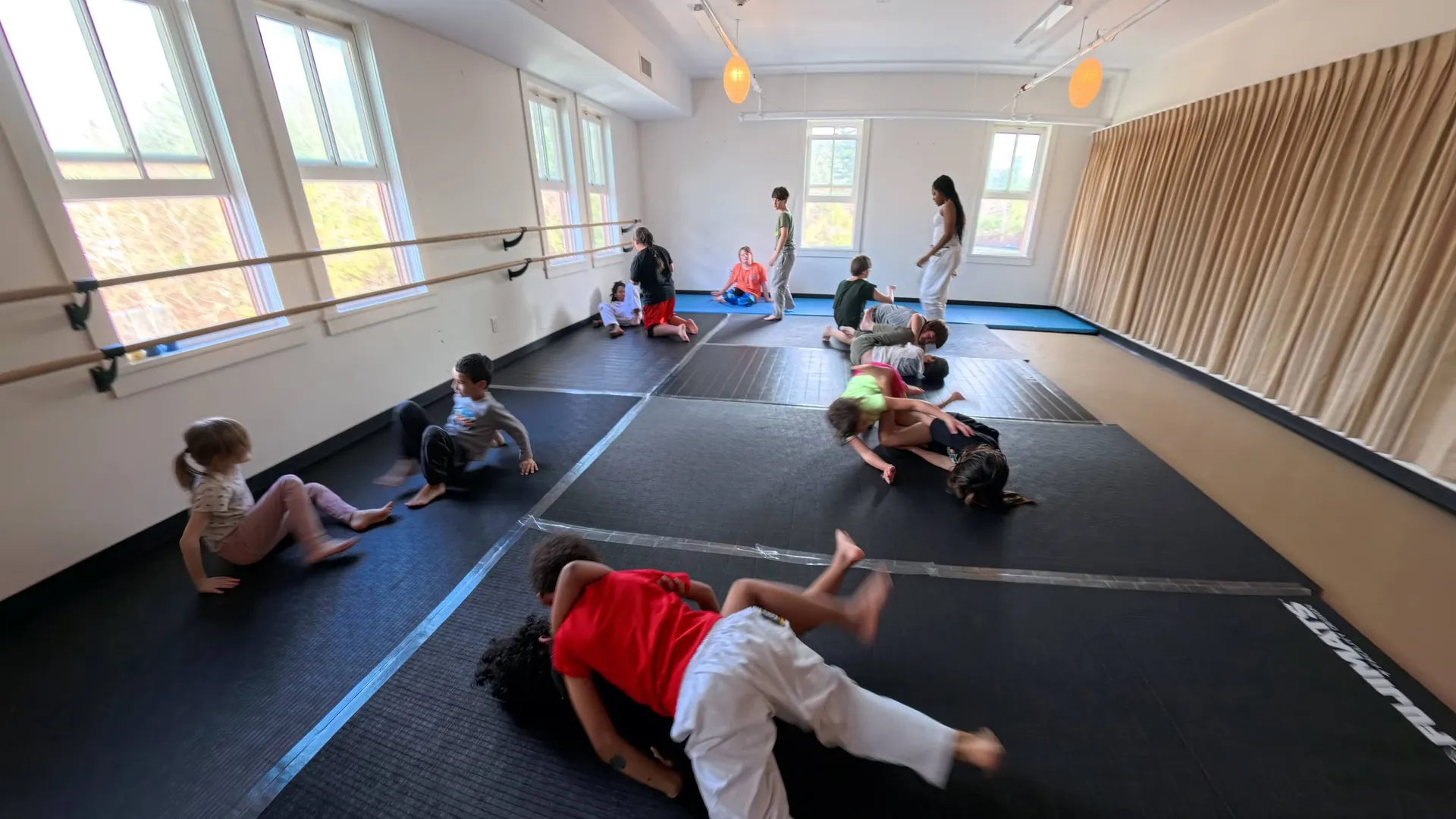
What Is Sanda (Sanshou)? A Simple Explanation for Jiu Jitsu People
Sanda is striking plus throws. Jiu jitsu is grappling plus control.
Updated February 22, 2026
If you searched sanda vs jiu jitsu, you probably want the simple difference fast. Sanda is striking plus throws. Jiu jitsu is grappling plus control. This guide explains Sanda in plain English, then helps you map when it should be your primary class versus your secondary class. Reserve Your Free First Visit.
The 10 second definition of Sanda (Sanshou)
- Sanda, also called Sanshou, is full-contact striking with kicks and punches.
- Clinch and throws are a big part of the sport format.
- In many events, action resets quickly after a clean throw.
What Sanda training looks like (for a grappler)
Early rounds feel like distance management and timing first, then sudden clinch collisions. Throws reward balance, posture, and smart entries more than raw strength. Reserve Your Free First Visit.
Common beginner mistakes are predictable: reaching, standing too tall, chasing head shots, and entering straight with no angle.
The parts that overlap with jiu jitsu
- Balance and base: if your hips stay under you, you are hard to throw.
- Clinch awareness and hand fighting: inside control still matters.
- Off-balancing into takedown entries: same principle, different range.
- Calm under pressure: contact tolerance transfers directly.
The parts that do not overlap much
- Striking timing and range reading are separate skills.
- Seeing kicks early takes reps, not theory.
- Defensive shell and footwork habits differ from grappling habits.
- Rules change what athletes choose to do under pressure.
Sanda vs jiu jitsu in one clean comparison
| Category | Sanda (Sanshou) | Jiu Jitsu |
|---|---|---|
| Distance | Far to mid range | Close range |
| Win condition | Score, disrupt, stun, throw | Control position, escape, finish |
| Floor time | Often limited with resets | Core focus with position chains |
For the full decision framework, including the 12-week class-first plan, go back to Sanda vs Jiu Jitsu.
Who should try Sanda first
- You love striking and movement.
- You want a fast, upright sport with frequent reset points.
- You want throws without long ground exchanges.
Who should try jiu jitsu first
- You want beginner-safe control skills and pacing.
- You want strong self defense fundamentals for clinch and ground.
- You want a calmer learning curve, especially for smaller people.
Parents can start with the kids jiu jitsu beginner class or teens jiu jitsu beginner class. Adults can read Catskills gym alternative for fit and culture. Browse the beginner BJJ glossary.
Bridge advice: do both without confusion
Pick a primary class for 12 weeks, add the other class one day per week, and keep your goal simple: distance skill plus close-range safety. If you want faster correction, use private jiu jitsu classes.
Need a consistency anchor? Use this gi vs no-gi training plan.
Can Sanda beat jiu jitsu? Honest answer
It depends on rules, starting distance, and what happens after the first major moment. In striking range, striking can decide it quickly. In clinch-to-ground exchanges, control and escapes matter more.
For the bigger frame, read Sensei MMA BJJ. Browse the beginner BJJ glossary.
FAQs
What is Sanda vs Sanshou
Most people use both words for the same striking-plus-throws format.
Is Sanda good for self defense
It can be, especially for timing and impact management. Self defense still depends on awareness and what happens if range collapses.
Is Sanda like Muay Thai
They overlap in striking, but Sanda usually emphasizes throws and quick clinch transitions depending on rules.
Can Sanda beat jiu jitsu
Sometimes, especially if it stays at striking range. If it becomes clinch-to-ground, jiu jitsu control often matters more.
Should I start with Sanda or jiu jitsu first
If you want calm beginner progression, start with jiu jitsu. If you want striking-first movement and throws, start with Sanda.
Bottom line
Sanda is a striking-first art with real throws. Jiu jitsu is a control-first art that shines when distance closes. If you want a stable base for self defense, start with control first, then add striking. See 12-week program pricing.
Next reads: Pillar: Sanda vs Jiu Jitsu · First BJJ Class minute by minute · read the FAQs for beginners · more beginner-friendly guides See 12-week program pricing.
Reserve Your Free First Visit