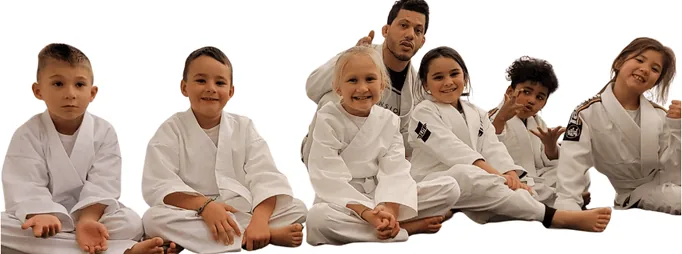
BJJ Belts, Stripes, and Promotions
How we rank up students at Sensei Sandy BJJ with clear standards, calm coaching, and parent-friendly celebrations.
Catskills and Tannersville, NY.
Sensei Sandy BJJ | Catskills Reserve Your Free First Visit.
If you are new to Brazilian Jiu-Jitsu, belts can feel confusing. Kids earn stripes. Adults earn stripes. Sometimes a new belt shows up and everyone claps. So what is happening?
At Sensei Sandy BJJ, promotions recognize a body of evidence: safe participation, functional skill, adaptability, and growing independence. Winning rounds, attendance, or reproducing one technique is not enough by itself. Reserve Your Free First Visit.
We use IBJJF belt order and age/eligibility guardrails as a reference point, while keeping Sandy's coaching judgment separate: progress is not automatic. Coaches promote people, not calendars. See how observable progress is described and where that evidence comes from in class.
What Are Stripes in BJJ?
Stripes are smaller recognition inside a longer belt stage. They are a coach's way of saying that meaningful development has become visible—not an attendance prize or a technique checklist.
Two students may receive a stripe for different developmental reasons because they may be solving different problems. Sandy should be able to explain the recognition with one specific observation.
- Academy expectations: training safely, releasing holds promptly on a tap, communicating clearly, and caring for partners. These are the floor for training together, not a stripe currency.
- Recognize and Protect: understanding what is happening and making safe decisions for self and partner.
- Solve: producing useful solutions against safe resistance, with steady competence across core positions.
- Adapt and Express: changing direction when the first answer fails and increasingly choosing solutions with growing personal initiative.
A stripe does not mean you know everything. It is a smaller milestone inside a longer stage, explained by what Sandy has seen becoming more dependable.
When a stripe is awarded, the useful explanation is specific: “Your recovery is more reliable now, and when the first answer is blocked you are starting to find another direction.”
What Do BJJ Belts Mean?
A belt is a broader developmental milestone. It reflects a whole student's changing practice: breadth, useful reliability, safe decisions, adaptability, growing independence, and coach judgment—not a perfect score across every problem.
Belts help students:
- Track progress over months and years.
- Stay motivated during slow-growth phases.
- Set goals with sustainable consistency.
Kids BJJ Belts (IBJJF Guideline)
Kids progress through more belt colors than adults and that is intentional. Kids develop in smaller steps, and frequent milestones help them stay confident and engaged.
Typical kids belt progression (roughly ages 4 to 15):
- White
- Grey / White to Grey to Grey / Black
- Yellow / White to Yellow to Yellow / Black
- Orange / White to Orange to Orange / Black
- Green / White to Green to Green / Black
As kids get older, the adult belt system becomes relevant along with minimum age requirements.
Adult BJJ Belts (IBJJF Guideline)
The classic adult belt order:
White to Blue to Purple to Brown to Black Browse the beginner BJJ glossary.
The IBJJF publishes minimum age and time-in-rank guardrails, especially for higher belts. Still, the instructor makes the final call based on readiness, not the calendar.
Links guardrails
-
"Minimum ages: Blue and Purple 16+; Brown 18+; Black 18+ only if Brown-belt Adult World Champion."
Source: current IBJJF Graduation System (published June 11, 2026). IBJJF
-
"Adult minimum time at rank: Blue belt 2 years, Purple belt 1 year and a half, Brown belt 1 year."
Source: current IBJJF Graduation System (published June 11, 2026). IBJJF
-
"Black belt degree timing: you can request a 1st degree after 3 years of proven activity as a black belt."
Source: current IBJJF Graduation System (published June 11, 2026). IBJJF
-
"The IBJJF counts the periods listed in Article 3 from the day the athlete completes registration of each belt rank."
Source: current IBJJF Graduation System (published June 11, 2026). IBJJF Browse the beginner BJJ glossary.
Related reads: how often promotions happen and black belt degree timing.
What Promotion Evidence Looks Like
Promotions recognize a body of evidence. There is no single move, win total, attendance number, or Report Card state that triggers one. The Report Card helps organize observations; it does not calculate or award a belt.
1) Protect
- Safe decisions for self and partner while resistance becomes more meaningful.
- Useful resistance that lets both people learn.
- Early taps and quick releases.
- Clear communication when something feels wrong.
2) Recognize and Solve
- Solving a growing range of grappling problems.
- Solutions that work against safe resistance.
- Useful breadth with steady competence across core positions.
3) Adapt
- Recognizing when the situation changes.
- Choosing another useful option when the first answer fails.
- Keeping safety while changing direction.
4) Express
- Recognizing familiar problems with independent positional awareness.
- Choosing solutions that fit the student's body, timing, and preferences.
- Explaining the problem or goal with less coach scripting.
Showing up matters because repeated problems, partners, and situations create opportunities for development and evidence. Attendance is an opportunity to practice and be observed, not promotion currency.
Academy Expectations Are Not Rank Requirements
- Bullying or roughness.
- Winning rounds by force.
- Listening when instruction or a safety boundary is needed.
- Skipping fundamentals.
- Racing teammates to rank up.
These expectations keep the room functional and safe. They matter before technical progression, but safe compliance alone does not demonstrate a new level of Jiu-Jitsu.
How We Handle Kids Promotions (and Why Parents Matter)
Promotions recognize development, not compliance. Sandy communicates with parents when kids earn stripes or belts so families can celebrate the specific development while keeping daily enjoyment front and center.
- Celebrate at home.
- Understand what the promotion represents.
- Ask what changed, what feels easier, and what the student is working on next.
Showing up matters, but it does not buy promotion. Avoid countdown questions about classes or comparisons with another student.
Promotions Are Not a Race
A healthy BJJ belt system keeps training honest. You do not speed-run it, you build it. When students rank up here, the promotion tells a story of skill that has already begun to hold under resistance. A celebration can stay joyful—a clap, a photo, a tied belt—while Sandy names the specific change that made the milestone meaningful.
FAQ: BJJ Belts, Stripes, and Ranking Up
How many stripes are there per belt?
Many schools use up to four stripes per belt. Stripes are a coaching tool, and systems vary.
How long does it take to get promoted?
There is no calendar promise. Sandy looks for a broad pattern of safe training, useful skill, adaptability, and growing independence; repeated attendance provides evidence but does not automatically trigger promotion.
How will I know when my child is progressing?
Look for changes such as handling harder situations, needing less prompting, making safer partner decisions, trying again after failure, and adapting when the first answer does not work. Ask what has become more reliable—not how many classes remain until a stripe.
Do kids get different belts than adults?
Yes. Kids use the grey, yellow, orange, and green system. Adults use white, blue, purple, brown, and black.
Try a Beginner Class
If you want a beginner-friendly place with calm coaching, clear standards, and a safe training room, come try a class. See 12-week program pricing.
Sensei Sandy BJJ - Catskills / Tannersville, NY.
Nearby families: Windham, Hunter, and Haines Falls. See 12-week program pricing.