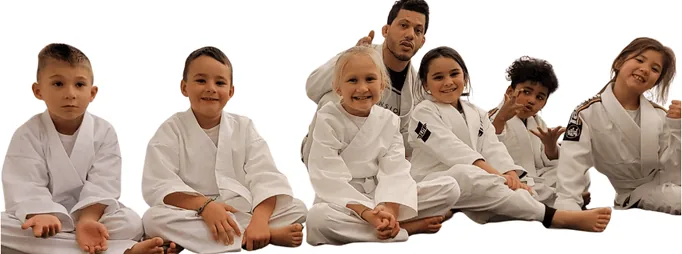
Kids and Teen BJJ Belts: A Parent Guide
Students may share a class and still use different belt rules. Age rules and coach judgment both matter.
Updated February 24, 2026
BJJ belts show a stage of skill. Coaches look at safe practice, problem solving, and growth over time. Reserve Free Intro.
Many schools and events use IBJJF belt rules as a guide. Kids and teens may use different belt tracks. Age matters even when they share a class. [1] Reserve Free Intro.
Quick answers for parents
- Kids ages 4 to 15 use the IBJJF youth belt system (13 ranks). [1]
- Teens in the year they turn 16 move into adult belt colors (white, blue, purple, brown, black). [1]
- IBJJF minimum age for blue belt is 16, and the same minimum age applies to purple. [1]
- For ages 4 to 15, IBJJF lets coaches judge time at each belt. [1]
- IBJJF publishes three suggested kid degree systems: monthly, quarterly, and triannual. [1]
1) Which Belt Track Fits Your Child?
Kids Belts: Ages 4 to 15
IBJJF lists 13 belt ranks for athletes ages 4 to 15. [1]
Teen Belts Depend on Age
- Ages 13 to 15: still in the kids belt system. [1]
- Ages 16 to 17: may be in adult belt colors (white, blue, purple). [1]
- Age 18+: adult belt colors continue (white through black). [1]
How IBJJF Counts Age
IBJJF uses the current year minus birth year. A student counts as 16 in the year they turn 16. [1]
2) Kids belt ranks in order (IBJJF ages 4 to 15)
- White
- Grey and White
- Grey
- Grey and Black
- Yellow and White
- Yellow
- Yellow and Black
- Orange and White
- Orange
- Orange and Black
- Green and White
- Green
- Green and Black
Minimum ages by color group (IBJJF)
- Grey group: ages 4 to 15
- Yellow group: ages 7 to 15
- Orange group: ages 10 to 15
- Green group: ages 13 to 15
These rules set the age range for each belt group. A coach still judges when a student is ready. [1]
3) When does a teen become a blue belt?
- Blue belt: 16 or older
- Purple belt: 16 or older
- Brown belt: 18 or older
Age sets the first gate. A coach still judges skill before giving a new belt. [1]
4) Stripes vs degrees: what do they mean?
Many schools use stripes on a belt. IBJJF calls these degrees in its youth posters. Each mark shows a step within a belt stage. [1]
- Belts: major stages
- Stripes/degrees: progress within a stage
5) How often do kids get stripes or degrees?
Schools can use different stripe plans. IBJJF lists three sample youth systems for ages 4 to 15. Coaches choose what fits their school. [1]
One Mark Each 3 Months
- 3 degrees inside a belt
- 4th degree moves to next belt color
- Poster cycle shown as total 1 year
One Mark Each 4 Months
- 2 degrees inside a belt
- 3rd degree moves to next belt color
- Poster cycle shown as total 1 year
One Mark Each Month
- 11 degrees inside a belt
- 12th degree moves to next belt color
- Poster cycle shown as total 1 year
Special white/grey-white note
One monthly IBJJF model splits a year in two. It lists 6 months at white and 6 months at grey-white. This is a sample model. [5]
6) How kids earn the next belt
For ages 4 to 15, IBJJF lets a coach judge time at each belt. It sets a minimum age for each color group. Sandy looks at skills over time to judge readiness. [1]
Safe Partner Work
- Training with control
- Pausing when asked
- Give your partner a task at a calm pace
Functional Grappling
- Solve a task as your partner adds resistance
- Learn skills in more positions
Changing Your Plan
- Try a new move when the first is blocked
- Spot a new problem and ask for help
Choosing Your Own Moves
- Choose moves that fit your body and the task
- Find your next move with less coach help
Class time gives students chances to learn. Sandy looks at the skills he sees in those rounds. Attendance alone earns neither a stripe nor a belt.
7) Competition note for older teens (16+)
For IBJJF events, check the age, belt, and time-at-rank rules. Ask your coach how they apply to your teen.
IBJJF minimum time rules that start at age 18+
- Blue belt: 2 years (with listed exceptions)
- Purple belt: 1.5 years (with listed exceptions)
- Brown belt: 1 year (with listed exceptions)
IBJJF lists exceptions for some youth and teen belt histories. It also has rules for adult World Champions. Read the full current rules with your coach. [1]
8) Parent FAQs
- Help them show up consistently.
- Make time for sleep, food, and water.
- Praise effort and care for partners.
- Ask what feels easier. Ask what they want to try next.
9) A Short Belt History
Modern belt ranks grew from Judo. The IJF lists early dan grades from 1883. The belt system changed over time. [6]
Some histories credit Mikonosuke Kawaishi with adding more belt colors in Europe in 1935. The colors helped show steps in a student's progress. [7]
Read the belt and stripe guide, promotion guide, and black belt degree guide. See current plans.
Sources
More to explore
Belts and Promotions
Read the belt and stripe guide, promotion guide, and black belt degree guide. See current plans.
Reserve Your Free First Visit
Related
Keep Reading
More to explore
Belts and Promotions
Read the belt and stripe guide, promotion guide, and black belt degree guide. See current plans.