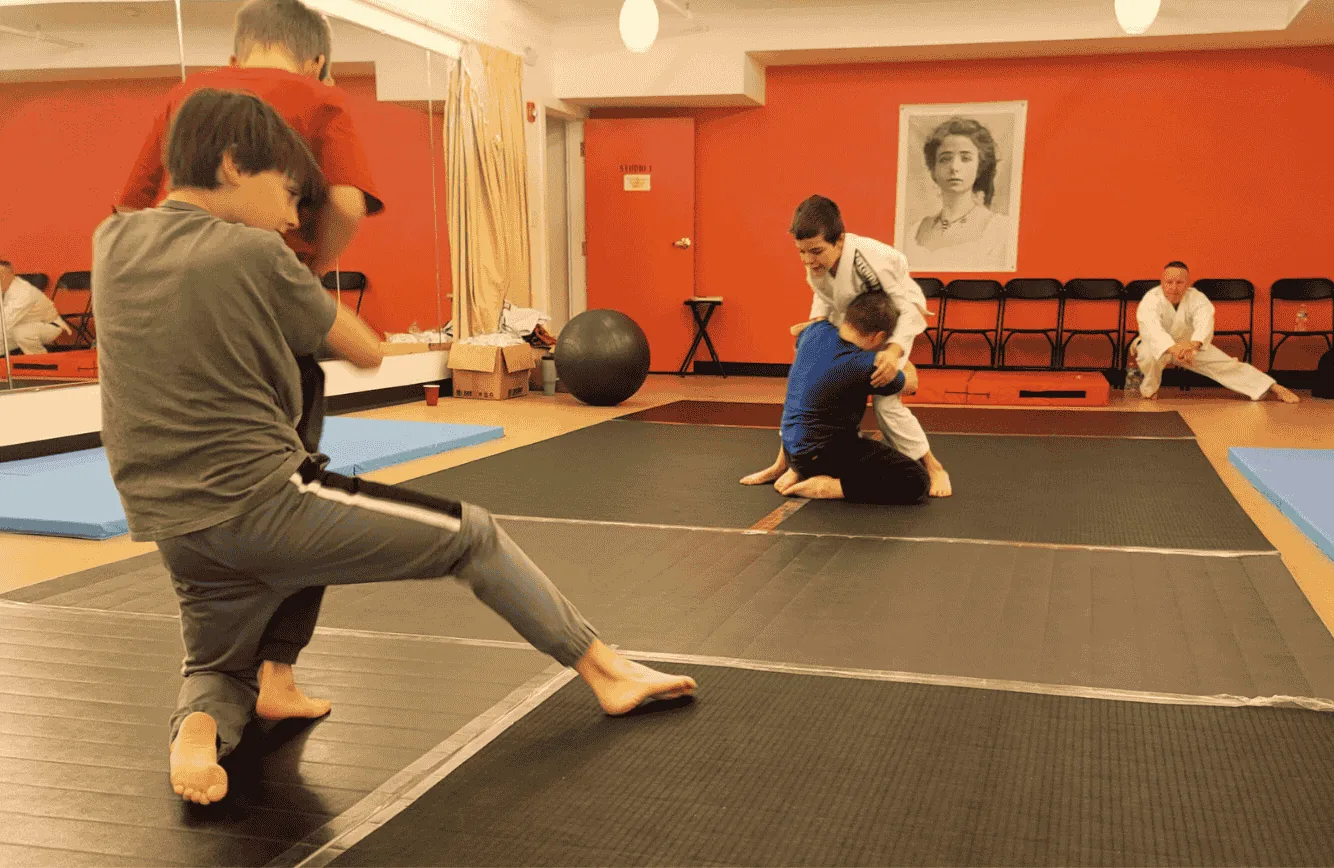
A parent’s guide
How Kids Grow in Jiu-Jitsu
Skills in class. Careful feedback. No score for who a child is.
Reserve Free IntroProgress is not a grade.
It is not a score for a child’s traits.
And it does not promise change at home or school.
Sandy looks at skills he sees in class, over time.
We do not use a personality score or level-up plan.
The Report Card shows skill states from repeated live practice.
A state may stay the same.
“Reliable” does not mean perfect.
Read the Progress Report Card, the Parent Guide, and How Class Works.
What a coach can see
One clear note can help more than a broad compliment.
What Sandy may see in a class:
- A child follows a safety cue or next step.
- A child lets go when a partner taps.
- A child says, “I need space” or “I need help.”
- A child asks for help after a hard try.
- A child tries a new way after a move fails.
- A child changes force when a partner resets.
- A child starts a round with less help.
These are actions we may see on the mat.
They are not grades or traits.
How class can change by age
Class tasks fit each child’s age, size, skill, and readiness.
Young kids may use short rules, clear turns, and simple roles.
They may play move games and practice safe falls.
Older or more skilled kids may solve longer tasks.
They may make more choices with a partner.
Age helps us plan a task.
It does not tell us how a child feels.
The Constraints-Led Approach helps us shape tasks and class space.
It is a way to plan learning.
It does not prove gains at home or school.
Class notes and home life
A parent may share what they see at home.
That can help Sandy know a child.
It is not proof for the Report Card.
A class skill does not promise fewer meltdowns, better homework, better grades, steady moods, or less bullying.
Jiu-jitsu gives kids time to practice focus, clear words, and problem-solving.
What they use outside class may vary by child and place.
Questions for the ride home
Try a calm, open question:
- What felt fun today?
- What was hard?
- What would you like to try next?
There is no need to ask who won each round.
What research can tell us
Studies may find links across groups of children.
Those links do not prove this class caused change at home or school.
We share what Sandy sees in class.
Plan a first class
New students see the room and learn key safety steps.
Then they can choose what to do next.
Read the Report Card or see plans and prices.
See a class that fits: