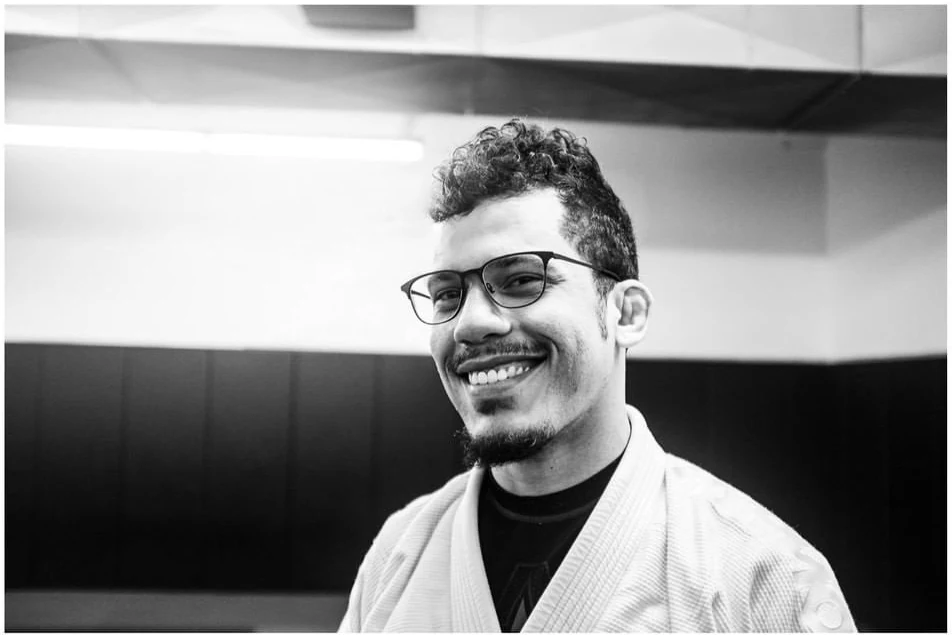
Better control matters when the encounter gets close
Departments are dealing with high-risk close-range encounters, escalation in confined spaces, poor cuffing transitions under resistance, and limited hands-on control training outside qualification cycles. When control breaks down, the cost is not just tactical. It can become injury exposure, downtime, liability, and force escalation.
This program is built around a simple operational idea: officers need more usable control, not just more fitness. It focuses on positional competence, decision-making under pressure, and repeatable restraint skills that transfer to real law enforcement environments.
Evidence that supports the training case
Multiple U.S. departments have reported better force and injury outcomes associated with grappling or leverage-control programs built on BJJ principles. The current evidence base is operationally useful but mostly observational rather than experimental, so outcomes should be presented as department-reported associations, not universal guarantees.
Marietta department-reported data summarized 95 officers participating in more than 2,600 classes with one reported training injury. It also reported officer injuries during arrests dropping from 29 in the 18 months before implementation to 15 in the 18 months after, plus a Taser-use difference of 77% for non-BJJ officers versus 54% for BJJ officers.
Saint Paul internal analysis covering 2,845 use-of-force incidents (June 1, 2014 to May 31, 2020) reported outcomes including lower force frequency and lower injury rates after adopting a leverage-control model built on modified BJJ techniques.
A peer-reviewed 2024 evaluation tied to the Saint Paul model, summarized by IACP, reported the approach was associated with estimated reductions in officer and significant subject injuries after adjustment for encounter, subject, and officer characteristics.
A Tiverton department example also reported three consecutive calendar years (2023 to 2025) with no injuries in force incidents where at least one BJJ officer was present. This is correlational and smaller-sample, but directionally supportive.
Program Structure
What the 12-Week Pilot Actually Looks Like
Departments do not buy mystery. They buy structure. This is the actual 12-week training spine for a 3x/week pilot squad block built around usable control, standing restraint, top stabilization, cuffing transitions, and safer officer-subject outcomes.
Built from public law-enforcement grappling and arrest-control models that emphasize technical stand, sprawling, positional control, handcuffing transitions, officer-specific adaptation, scenario-based reinforcement, and lower-risk beginner onboarding. 1 2 3 4 5 6
12 weeks. 3 classes per week. 60 minutes per class. 36 total sessions.
This pilot format is structured as supplemental arrest-control training. It is built around movement, positional dominance, standing recovery, clinch control, low-risk takedowns, restraint mechanics, team cuffing, survival under pressure, and final scenario testing.
- Use this as supplemental arrest-control training only.
- All content stays subordinate to department policy, state law, medical restrictions, and instructor oversight.
- Keep most partner work technical and controlled.
- Build pressure progressively, not all at once.
- Skill and competency matter more than competition behavior.
- Every scenario includes a decision point: stabilize, cuff, disengage, or wait for support.
- 5 min: Safety check, medical issues, duty-gear briefing, objective of the day
- 8 min: Movement warm-up
- 10 min: Review of prior material
- 15 min: Primary skill
- 10 min: Secondary skill
- 8 min: Positional or situational drill
- 4 min: Debrief, performance notes, policy tie-in
Week 1: Movement, Base, and Officer-Specific Mindset
- Class A: Introduce sport vs officer application, stance, posture, verbalization, and safe movement. Technical stand, movement with verbal commands, grounded-to-standing recovery, weapon-side awareness.
- Class B: Defensive reactions and disengagement mechanics. Sprawl, frame, create distance, reset, verbalize.
- Class C: Combine movement and recovery. Technical stand under partner pressure, angle off, verbalize, re-engage or disengage.
Week 2: Top Control, Pressure, and Positional Dominance
- Class A: Side control. Crossface, hip control, head position, timed top holds, verbal commands from dominant position.
- Class B: Mount control. Low-risk mount-to-side transitions, balance, posture, resistance management.
- Class C: Connect side control and mount. Single-arm isolation from top, control rounds without losing base.
Week 3: Bottom Survival, Escapes, and Stand-Up Recovery
- Class A: Side control escape. Create space, recover to guard or knees, protect head and weapon side.
- Class B: Mount escape. Re-guard, frame, bridge, recover without panic or bench-pressing.
- Class C: Guard get-up to technical stand. Escape, stand, create distance, verbalize.
Week 4: Guard Management and Control from the Middle
- Class A: Guard control. Posture, hands, hips, distance, and no head-forward posture errors.
- Class B: Open space and stand safely. Frame, separate, stand, recover distance, verbalize.
- Class C: Guard control to standing exit or pinning transition. Scenario rounds from closed guard.
Week 5: Standing Contact, Clinch Entry, and Balance
- Class A: Close distance without overcommitting. Clinch control, head position, underhooks, posture, stable disengagement.
- Class B: Break bad ties and survive grabs. Clinch escape, body-lock escape, angle creation.
- Class C: Standing control with escort mechanics. Move to wall or ground setup while contact and cover communicate clearly.
Week 6: Low-Risk Takedowns
- Class A: Arm-drag clinch takedown and single-arm takedown. Clean entry, controlled finish, posture-first cues.
- Class B: Walk-away takedown and grab-or-push response takedown. Redirect, finish, maintain top.
- Class C: Osoto-gari and limited double-leg exposure under instructor control. Takedown to immediate stabilization.
Week 7: Restraint Mechanics and Single-Officer Cuffing
- Class A: Top control to restraint. Single-arm control, kimura-style restraint pathway, stabilize torso without losing base.
- Class B: Belly-down handcuffing. Chest and hip control during cuffing, sequencing under light resistance.
- Class C: Alternate cuffing pathways from belly-up or side control once the subject is stabilized.
Week 8: Two-Officer Cuffing and Teamwork
- Class A: Contact-cover roles on the ground. One officer pins, one officer cuffs, both follow a communication checklist.
- Class B: Takedown to partner-assisted restraint. Role switching if first officer loses position.
- Class C: Team restraint under pressure. Escalating scenario rounds with organized communication and safe transitions.
Week 9: Survival Under Assault
- Class A: Bottom survival under simulated strikes. Cover posture, trap-and-roll pathway, airway and vision protection.
- Class B: Standing and ground headlock defense. Immediate posture correction, hand fighting, safe exit.
- Class C: Survival to escape to control. Recover top position or stand if top is not secure.
Week 10: Choke, Clinch, and Body-Lock Defenses
- Class A: Guillotine defense. Hand-fighting, posture correction, angle correction, no panic response.
- Class B: Rear attack survival. Rear naked choke defense, peel, turn, face, recover posture.
- Class C: Body-lock and clinch survival. Frame, turn out, create space, escape cleanly.
Week 11: Scenario Integration
- Class A: Standing resistance to ground control. Subject pulls away, pushes, or ties up. Officer links clinch, takedown, side control, verbalization.
- Class B: Officer starts grounded. Escape, guard get-up, technical stand, re-control or disengage, partner-arrival options.
- Class C: Two-officer arrest sequence. Takedown, top control, cuffing, role assignment, safe transitions.
Week 12: Testing, Remediation, and Final Scenarios
- Class A: Skills test part 1. Technical stand, sprawl, side control, mount control, guard control, side escape, mount escape.
- Class B: Skills test part 2. Takedowns, clinch escape, body-lock escape, headlock defense, guillotine defense, rear-choke defense.
- Class C: Final scenario day. Standing resistance to cuffing, grounded officer recovery, two-officer restraint, and disengagement when continued grappling is unsafe or unnecessary.
- Monday / Class A: New technical material
- Wednesday / Class B: Expansion and resistance management
- Friday / Class C: Integration, scenario work, and testing
- Recover to feet safely
- Maintain top position without losing base
- Escape common inferior positions
- Execute at least one reliable standing control sequence
- Transition from control to cuffing without rushing
- Communicate clearly with partner and subject
- Protect weapon side and airway under pressure
- Apply only policy-consistent force during scenario rounds
- Keep intensity moderate until Weeks 9 through 12.
- Do not let competitive habits override restraint goals.
- Every class should include verbalization.
- Every cuffing day should include contact-cover language.
- Every scenario should include a disengagement option.
- Every test should score control, communication, and decision-making, not just technique completion.
References
- Georgia Peace Officer Standards & Training Council, Brazilian Jiu Jitsu Officer Level 1 Curriculum October 2022. Public officer curriculum listing technical stand, sprawling, side control, mount control, guard control, single-arm control, Kimura grip, belly-down and belly-up handcuffing, arm-drag takedown, walk-away takedown, double leg, osoto-gari, headlock defense, guillotine defense, rear naked choke defense, clinch escape, and body-lock escape.
- Foster City Police Department, POST Perishable Skills Program, Gracie Survival Tactics Course Outline Public 4-hour outline covering competition vs self-defense jiu-jitsu, officer-specific adaptation, duty-belt considerations, communication priorities, distance management, positional control, guard get-up, and transition to handcuffing.
- City of Mesa Police Department, Training and Wellness Division Mesa states its academy proficiency training includes defensive tactics, de-escalation techniques, Police Jiu-Jitsu, arrest procedures, and interactive scenario-based exercises.
- El Segundo Police Department public jiu-jitsu program memo Public beginner onboarding example stating there is no competitive sparring in beginner classes and that Gracie Combatives is based on 36 fundamental street self-defense techniques broken into 23 one-hour classes that can be completed in any order.
- Marietta Police Department, BJJ training data documents reduction in injuries Posted February 8, 2021. Marietta reports a 48% reduction in officer injuries using force, a 53% reduction in injuries to the person being arrested when force was required, and a 23% reduction in Taser use among participating officers.
- Gracie University, Gracie Survival Tactics Public program page describing GST as a 40-lesson system total, with 23 lessons in Level 1 and 17 lessons in Level 2.
Why this training translates operationally
This is not offered as a sport class disguised as tactical training. It is positioned as a control system built around minimal-force decision-making, composure, and practical body control, including clinch control, takedown defense, pins, cuffing transitions, standing restraint, wall work, ground stabilization, and team integration.
What officers train here
Mindset: minimal-force, composure, decision-making
Skillset: clinch control, takedown defense, pins, cuffing transitions
Application: standing restraint, wall work, ground stabilization, team integration
Small-group coaching, controlled rounds, and private blocks are built for retention instead of chaos.
Why departments are piloting leverage-based control training
Departments do not need another generic fitness offer. They need a productized service that is operationally relevant, easy to price, easy to schedule, and easy to pilot. This offer is built for predictable scheduling, private training formats scaled to squad size, and a clear proof-of-concept path.
Department-reported outcomes associated with grappling-based law enforcement training include:
Marietta reported fewer officer injuries, fewer serious suspect injuries, and lower Taser use after BJJ program implementation. Saint Paul reported lower force frequency and lower injury rates after adopting a leverage-control model built on modified BJJ techniques. Tiverton reported three consecutive calendar years with no injuries in force incidents where at least one BJJ officer was present. Evidence is operationally strong but mostly observational, so results should be described as reported associations rather than guarantees.
Three ways to deploy the program
Tier 2: Off-Peak Squad Block
Tier 3: Full Precinct Buyout
Best first move: start with a pilot squad
Tier 2 is the strongest first offer for proof-of-concept: enough officers for team cohesion, private instruction, easier scheduling, and a clear way to evaluate control, confidence, and operational readiness before wider rollout.
Best first step: Start with 5 to 8 officers. Train privately for 12 weeks. Evaluate outcomes. Then decide whether to scale.
How to Start
Ready to discuss a pilot, a private squad block, or a precinct-wide rollout?
Sensei Sandy BJJ
6045 Main St.
Tannersville, NY
(917) 736-8649