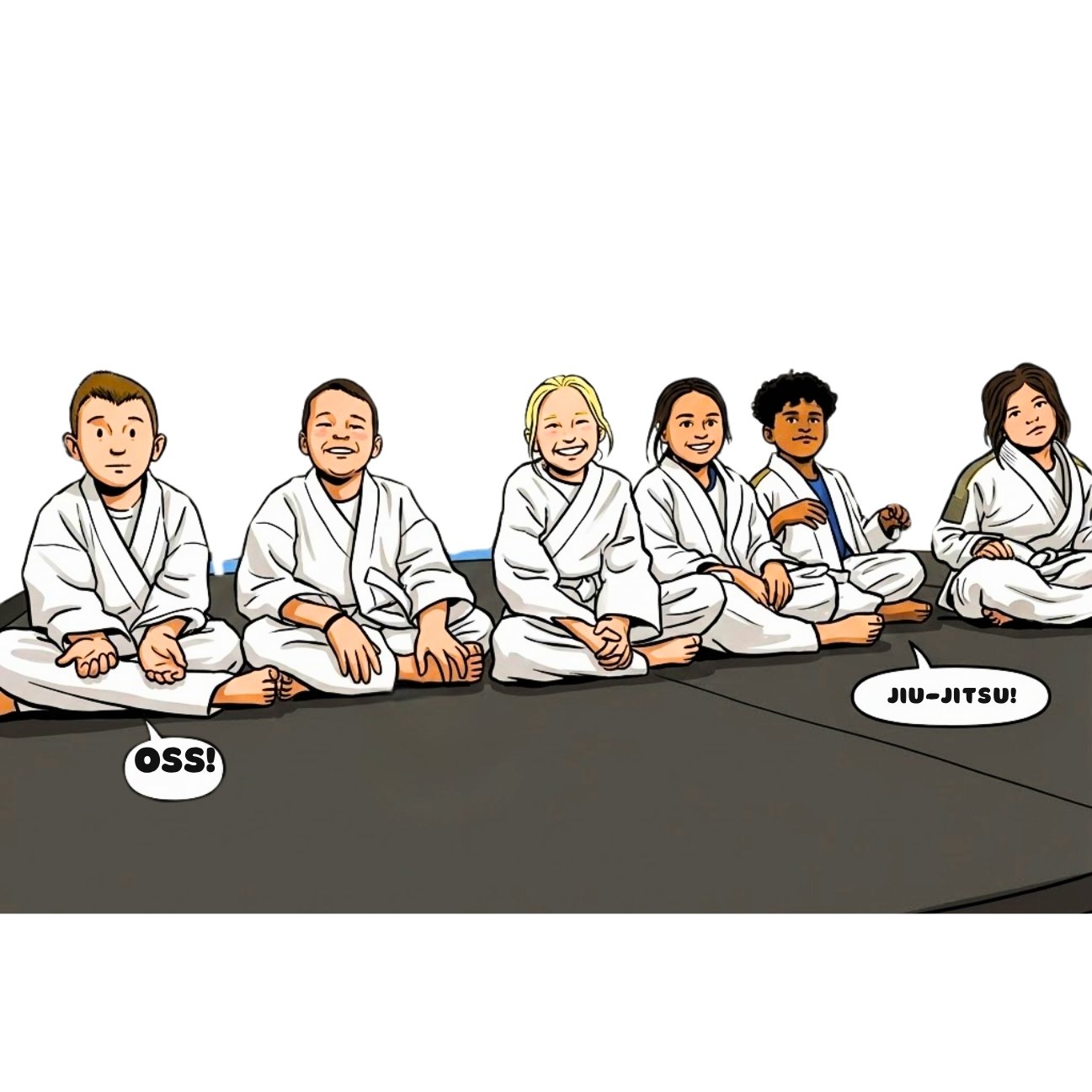
Schedule Sensei: Simple Time Management That Makes Training Stick
Time management is not about squeezing more into your day. It is about protecting the few things that move your life forward.
In Jiu-Jitsu, that thing is consistency. Not motivation. Not “when life calms down.” Consistency.
Beginner class = coached pacing from day one.
That is what Schedule Sensei means here: your schedule becomes the coach. It keeps training simple, repeatable, and hard to quit.
And the best part? You do not need a complicated system. You need a clear weekly rhythm and a way to recover when life happens while staying connected to your routine.
At Sensei Sandy BJJ, we build that rhythm into the program on purpose: same simple start times by age class and reschedule-anytime-by-text flexibility.
Quote ready facts (with sources)
- "Children and adolescents aged 6-17 years should do 60 minutes (1 hour) or more of moderate-to-vigorous physical activity daily." CDC
- "It took a median of 66 days for participants to reach maximum automaticity." Lally et al. (Wiley)
- "Time to reach habit formation varied widely ... with substantial individual variability (4-335 days)." PMC
- "Such intentions take the format of ‘I intend to do y when situation z is encountered.’" Gollwitzer & Brandstatter (1997)
- "If then planning substantially increased the likelihood of initiating action." Cancer Control
Retrieved: 2026-03-25. For current small-group class times and no-gi blocks, use the canonical View Schedule.
Fact Shield: Quick Answers with Sources
-
Q: How much activity should kids get? A: Youth ages 6-17 should get at least 60 minutes of moderate-to-vigorous activity daily.
Source: CDC. Retrieved: 2026-03-25.
-
Q: How much activity should adults get? A: Adults should get 150-300 minutes of moderate-intensity aerobic activity per week plus muscle-strengthening activity on 2 or more days.
Source: CDC. Retrieved: 2026-03-25.
-
Q: What percent of students are bullied? A: In 2021-2022, 19.2% of U.S. students ages 12-18 reported being bullied during school; among bullied students, 22% reported online/text bullying.
Source: NCES. Retrieved: 2026-03-25.
-
Q: When did NY DASA start? A: Signed September 13, 2010; effective July 1, 2012; cyberbullying amendment effective July 1, 2013.
Source: NYSED DASA. Retrieved: 2026-03-25.
-
Q: Do you offer No-Gi small-group classes? A: Yes. Wednesday includes Youth Small-group class No-Gi at 5:00-6:00 PM and Adult Class No-Gi at 6:00-7:00 PM. Saturday includes Adult No-Gi at 10:30-11:30 AM.
Source: Sensei Sandy schedule. Retrieved: 2026-03-25.
-
Q: What are standard class times? A: We teach morning private coaching. Youth small-group class starts at 5:00–6:00 PM, and adult class starts at 6:00–7:00 PM in Tannersville.
Source: Sensei Sandy schedule. Retrieved: 2026-03-25.
-
Q: Is BJJ dangerous? A: A 2025 study reported 5.5 injuries per 1,000 training hours vs 55.9 per 1,000 matches; most injuries occurred during training, mainly sparring.
Source: BMJ Open SEM study (2025). Retrieved: 2026-03-25.
-
Q: What is private-class pricing? A: Tannersville private coaching start at $195, with 10-session and 20-session packs available. Kingston add-on and standalone travel private coaching are available by text request when scheduling allows.
Source: Private Coaching page. Retrieved: 2026-03-25.
Jump Links
Why time management fails for most people
Most schedules are built on fantasy. They assume you will feel motivated, nothing unexpected will happen, you will catch up later, and you will have more energy next week.
Real life in the Catskills is not like that. Work, school, weather, family, and travel time all hit at once.
A schedule you can follow on your worst normal week wins every time.
The Schedule Sensei Rule
If you only remember one thing, remember this: make training the easiest yes in your week.
1) Pick a class, not a wish
Instead of “I’ll train more,” use a class:
- Kids: 5:00–6:00 PM
- Teens: 5:00–6:00 PM
- Adults: 6:00–7:00 PM
Same time. Same class. No guessing.
2) Reserve the spot
A reserved class removes decision fatigue. You are not thinking about going. You are going. That is why the Free First Visit is structured as a reserved spot with confirmation and the Show-Up Kit right after booking.
3) Life happens. Reschedule anyway.
A good schedule does not break when your kid gets sick or your work day runs long. Your plan should include the reset: reschedule by text anytime.
The Minimum Effective Dose week
12-week program includes three planned classes per week for steady momentum, allowing you to choose three recurring regular class times.
- One small-group class per week keeps you familiar.
- Two classes per week builds skill and comfort fast.
- Three is great,if your recovery can keep up.
If you want the calmest way to grow, choose three regular class times that fit your weekly routine.
A simple weekly template (Kids / Teens / Adults)
Your Schedule Sensei plan should be obvious enough to explain in one sentence. Here are three clean templates pulled directly from the way the schedule is designed.
Kids (5–9): confidence + safe falling
Option A: Mon + Wed
Option B: Tue + Fri
Teens (10–17): composure + athletic grappling
Option A: Mon + Wed
Option B: Tue + Fri
Adults (18+): calm, technical training
Option A: Mon + Wed
Option B: Tue + Fri
Adults can add an extra session later (Friday morning mixed, Saturday blocks) once your recovery rhythm is stable.
A quick note about safety
- Grappling-only training.
- Beginner class = coached pacing from day one.
- Partner matching and coached rounds keep the room calm.
When safety is clear, scheduling becomes easier,because you are not bracing for chaos.
Common scheduling traps (and how to fix them)
Trap 1: “I’ll start when things slow down.”
Fix: Start with the minimum effective dose. Pick two days. Put them on the calendar. Protect them like appointments.
Trap 2: “I missed a week, so I’m behind.”
Fix: Replace guilt with the reset. Text. Reschedule. Come in. Your schedule is not a moral scorecard. If you need the exact restart flow, use the Schedule Sensei reset protocol.
Trap 3: “I’m too busy to train.”
Fix: Tell the truth: you are too busy to decide. A fixed start time removes the daily debate.
Trap 4: “I want the perfect plan.”
Fix: Build a plan you can execute. Perfect plans collapse the first time life hits. Schedule Sensei plans bend and keep moving.
Integrate Schedule Sensei with your real tools (in 2 minutes)
- Add your two weekly classes to your phone calendar as repeating events.
- Set one reminder for “leave the house” (not small-group class start time).
- Share the calendar with your spouse/co-parent if you can.
- Save the gym text number as a favorite so rescheduling is frictionless.
FAQ
How often should I train to improve?
12-week program includes three planned classes per week. During your Free First Visit, you will choose three recurring regular class times.
What if I have to miss class?
Reschedule by text anytime. Do not wait for next month. Reset immediately.
Is it safe for beginners?
Beginner class pacing is built in: skill-based resistance activities begin at the right pace from day one, plus partner matching and coached rounds.
Where do I start?
Start with a Free First Visit so your spot is reserved and you get the Show-Up Kit right after booking.
Is Tannersville the main location?
Yes,Tannersville is the main location. Kingston is by appointment, coordinated by text.
Next step: View Schedule or Reserve Your Free First Visit.
Sources
- CDC Physical Activity Guidelines for School-Aged Children and Adolescents
- Lally et al. (2010), How are habits formed: Modelling habit formation in the main world
- Time to Form a Habit: A Systematic Review and Meta-Analysis (PMC)
- Implementation Intentions and Effective Goal Pursuit (1997)
- Implementation Intentions - Cancer Control monograph
Related Reading
Reserve Your Free First Visit